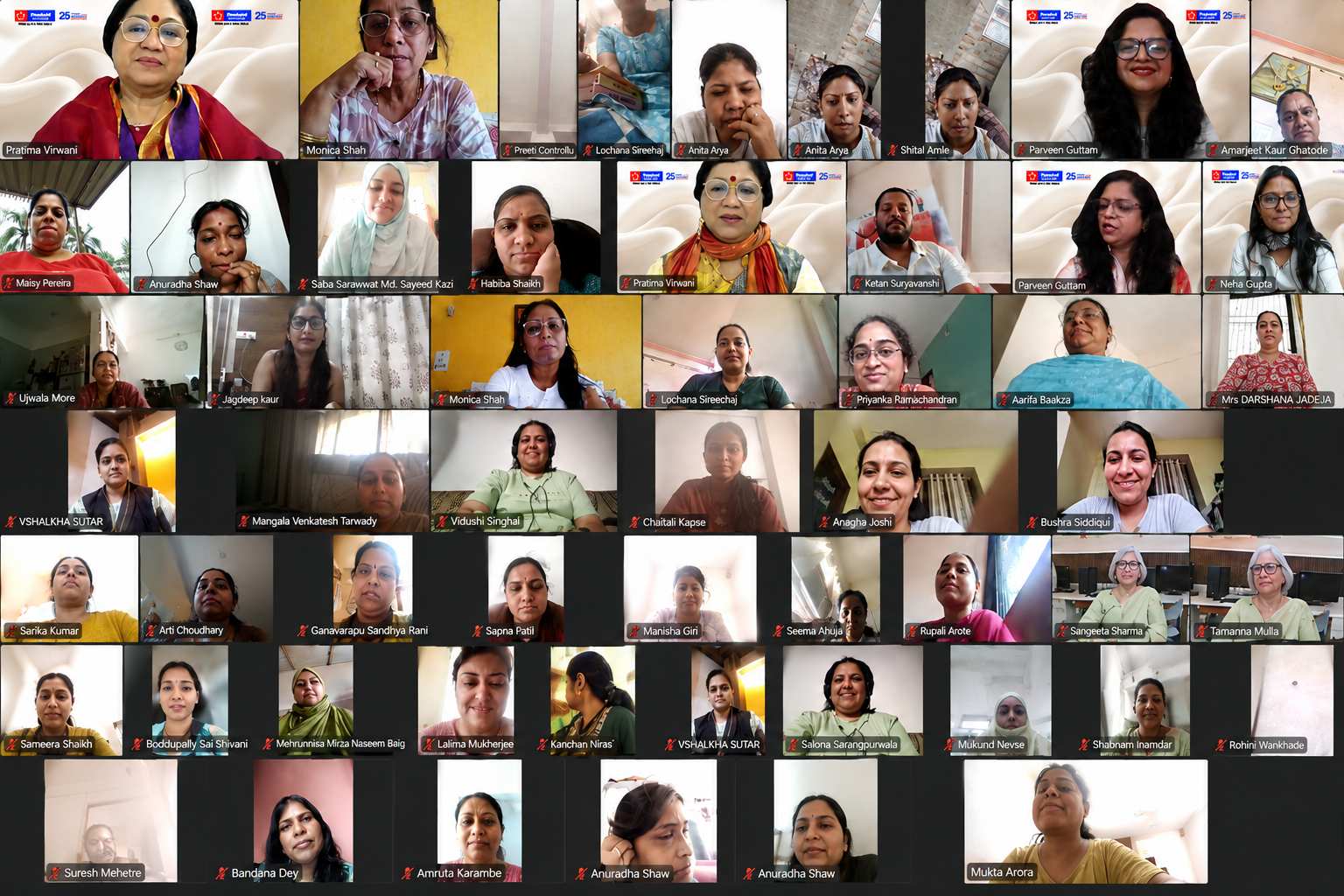
The Emotional Wellness Series commenced with a formal inaugural session that created a reflective and engaging learning environment. Ms. Parveen Gautam welcomed the trainers and participants, introduced the Sleepwell Foundation and its initiatives, and outlined the objectives and structure of the ten-session series. She also highlighted the vision of Mrs. Namita Gautam, Managing Trustee, Sleepwell Foundation, in promoting emotional wellness. Each session began with emotion-based visual activities and an introduction of the trainer, encouraging self-reflection, active participation, and experiential learning throughout the programme.
1. Emotional Wellness & First Aid (25 May 2026)
Facilitators: Ms. Vickei Rai & Ms. Suminder Kaur
A total of 202 teachers participated in the session, which introduced emotional wellness and its impact on overall well-being. Participants learned Emotional First Aid, immediate coping strategies, emotional regulation techniques, and daily self-care practices to recognize, manage, and respond effectively to emotional distress.
2. Perception & Gender Sensitization (29 May 2026)
Facilitators: Ms. Vickei Rai & Ms. Parmeet Kaur Manchanda
The session was attended by 150 teachers, who explored how perceptions are shaped through personal experiences and social influences. Interactive activities addressed gender stereotypes, unconscious biases, equality, inclusivity, and respect, encouraging teachers to promote gender-sensitive practices in classrooms and society.
3. Effective Communication (01 June 2026)
Facilitators: Ms. Vickei Rai & Ms. Simmi Hanspal
With the participation of 80 teachers, the session focused on effective communication through active listening, communication styles, body language, empathy, and overcoming barriers. Role plays and discussions strengthened participants' confidence in expressing themselves clearly and building healthy professional relationships.
4. Relationships (05 June 2026)
Facilitators: Mr. Vickei Rai & Ms. Parmeet Kaur Manchanda
112 teachers attended the session and learned the importance of trust, empathy, collaboration, and mutual understanding in relationships. Reflection exercises and interactive activities helped them identify healthy relationship patterns and strengthen interpersonal skills in personal and professional life.
5. Domestic Violence (08 June 2026)
Facilitators: Mr. Vickei Rai & Ms. Veena Aggarwal
The session engaged 85 teachers in discussions on domestic violence, including different forms of abuse, the cycle of violence, warning signs, psychological impacts, legal support, and preventive measures, enabling participants to respond with empathy and awareness.
6. Stress & Anger Management (12 June 2026)
Facilitators: Ms. Veena Aggarwal & Ms. Neelam Agarwal
Attended by 116 teachers, the session explored stress, including eustress and distress, anger triggers, myths, and the Anger Iceberg model. Practical techniques, relaxation exercises, and role plays equipped participants to manage stress and anger in healthy and constructive ways.
7. Coping with Depression (15 June 2026)
Facilitators: Ms. Parmeet Kaur Manchanda & Ms. Neelam Agarwal
A total of 91 teachers participated in the session, which addressed myths, symptoms, and warning signs of depression. Participants learned self-help strategies, ways to provide peer support, reduce stigma, and recognize the importance of timely professional mental health intervention.
8. Understanding Addiction (19 June 2026)
Facilitators: Ms. Suminder Kaur & Ms. Veena Aggarwal
The session was attended by 93 teachers, who explored addiction, particularly alcohol dependency, by understanding its causes, myths, psychological effects, peer pressure, the addiction cycle, and preventive strategies that encourage informed and responsible life choices.
9. Change Management (22 June 2026)
Facilitators: Ms. Suminder Kaur & Ms. Neelam Agarwal
With 93 teachers in attendance, the session introduced the Traffic Light Model (Stop–Pause–Continue) to help participants develop resilience, adapt positively to change, manage uncertainty, and make thoughtful decisions during personal and professional transitions.
10. Prevention of Suicide (26 June 2026)
Facilitators: Mr. Sachin Chitambaran
Conducted by Mr. Sachin Chidambaran, the final session was attended by 83 teachers. It focused on recognizing warning signs of suicide, encouraging open communication, providing timely support, promoting empathy, and strengthening awareness about help-seeking and suicide prevention.
Closing Session
The Emotional Wellness Series concluded with a vote of thanks delivered by Ms. Parveen Gautam, who acknowledged the dedication, active participation, and enthusiasm shown by the teachers throughout the programme. She reiterated the Sleepwell Foundation's commitment to promoting emotional wellness through awareness, capacity-building initiatives, and community outreach. Participants shared encouraging feedback, appreciating the relevance of the sessions and expressing that the programme had strengthened their emotional awareness, confidence, and practical life skills.
Throughout the series, participants remained actively engaged and receptive, contributing enthusiastically to discussions, activities, and reflective exercises. The interactive approach made the sessions practical, relatable, and conducive to experiential learning, while the supportive environment encouraged open sharing and meaningful reflection. Trainers effectively blended theoretical concepts with real-life applications, enhancing participants' understanding and confidence. Teachers also expressed keen interest in attending future emotional wellness programmes, requested similar offline workshops in their schools, and looked forward to receiving participation certificates to support their professional development.